
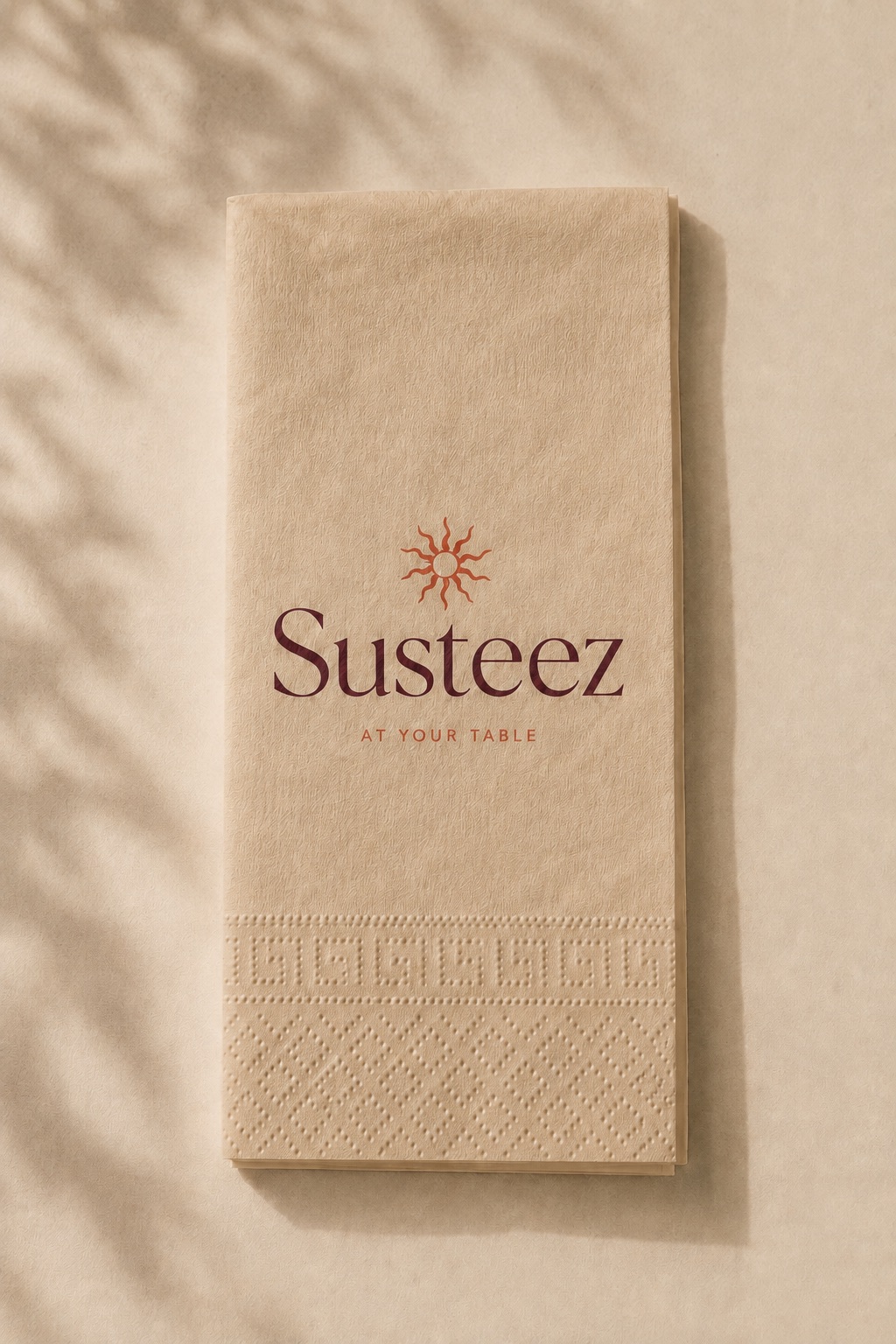
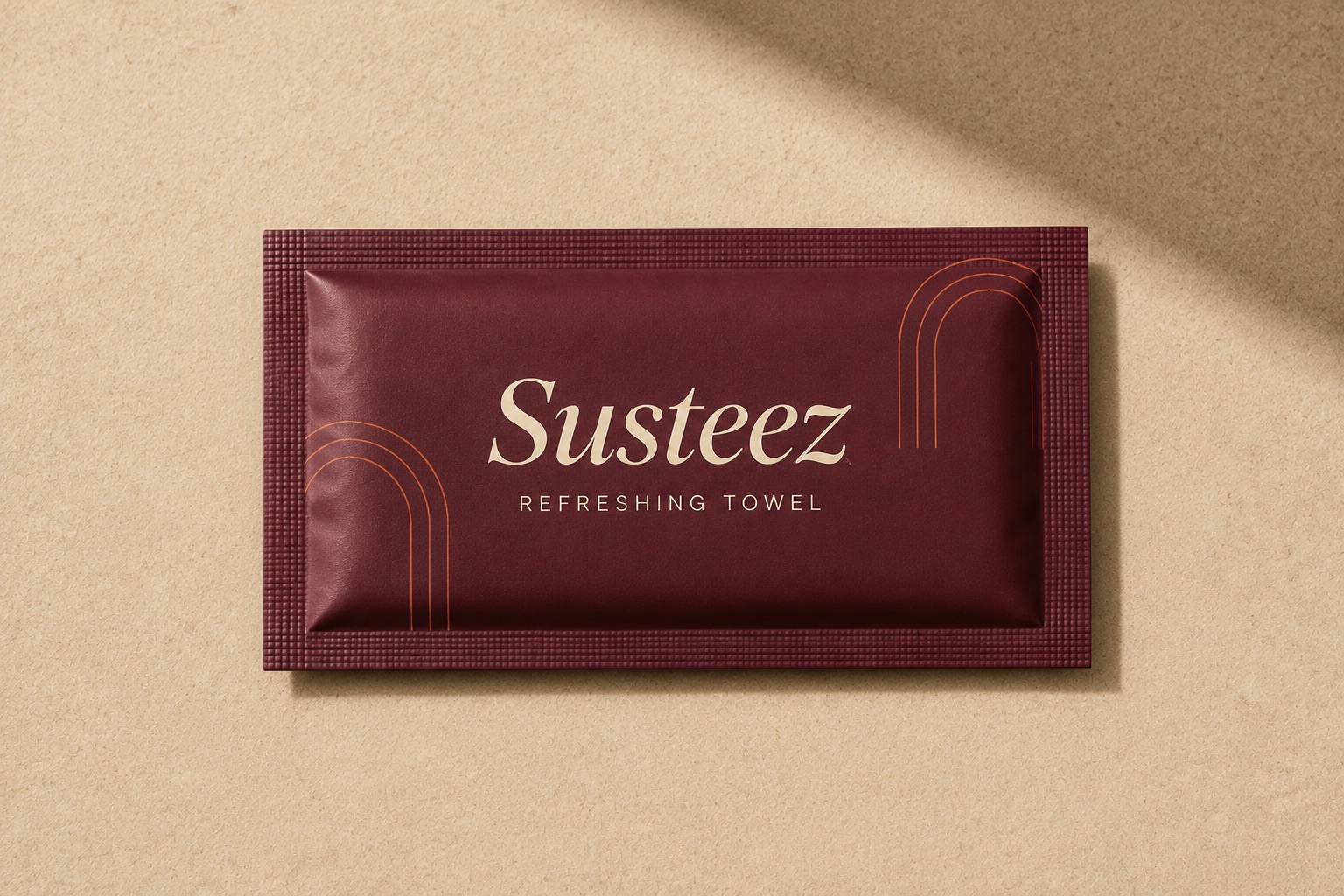
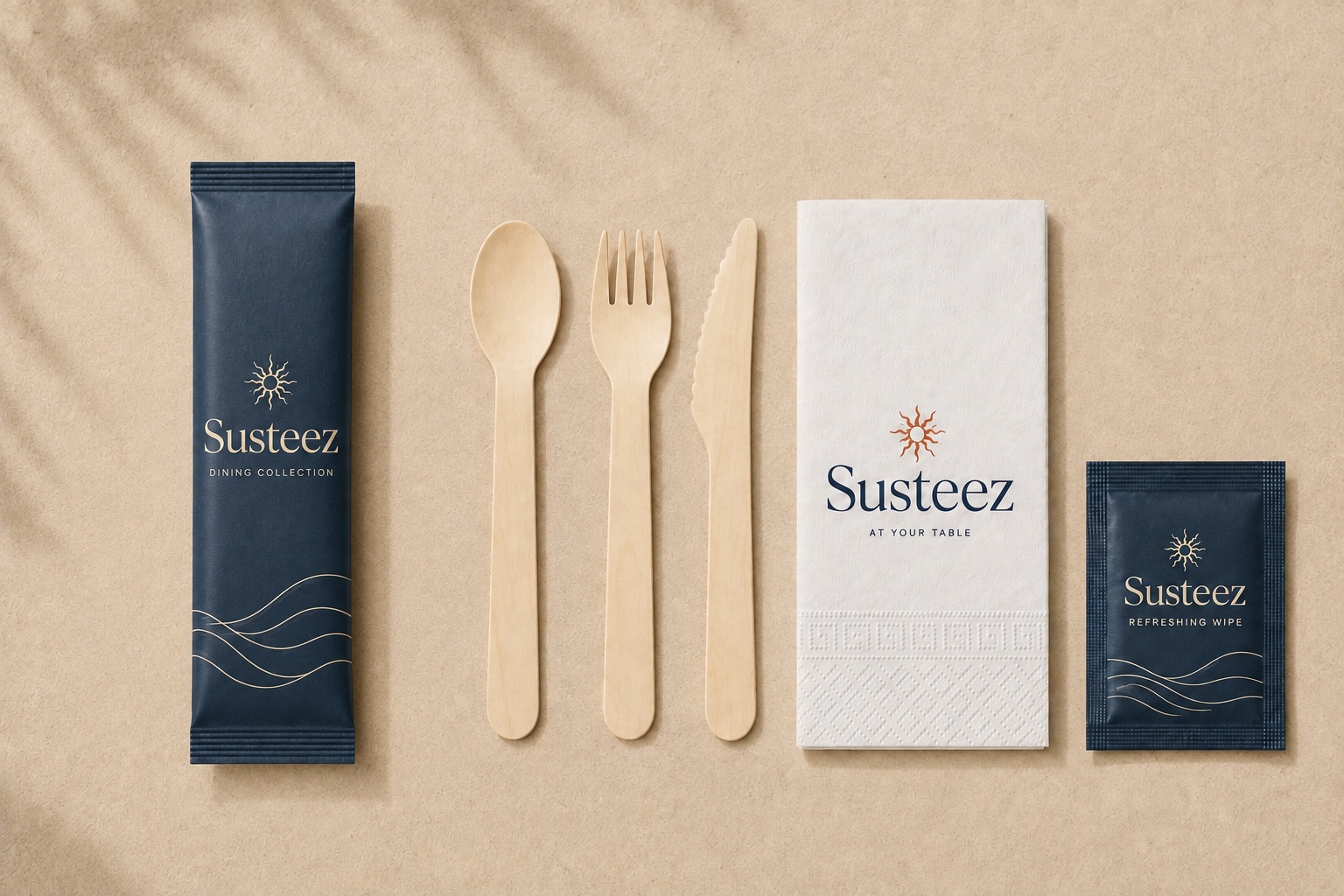
Patisserie: the box, the fork and the grease
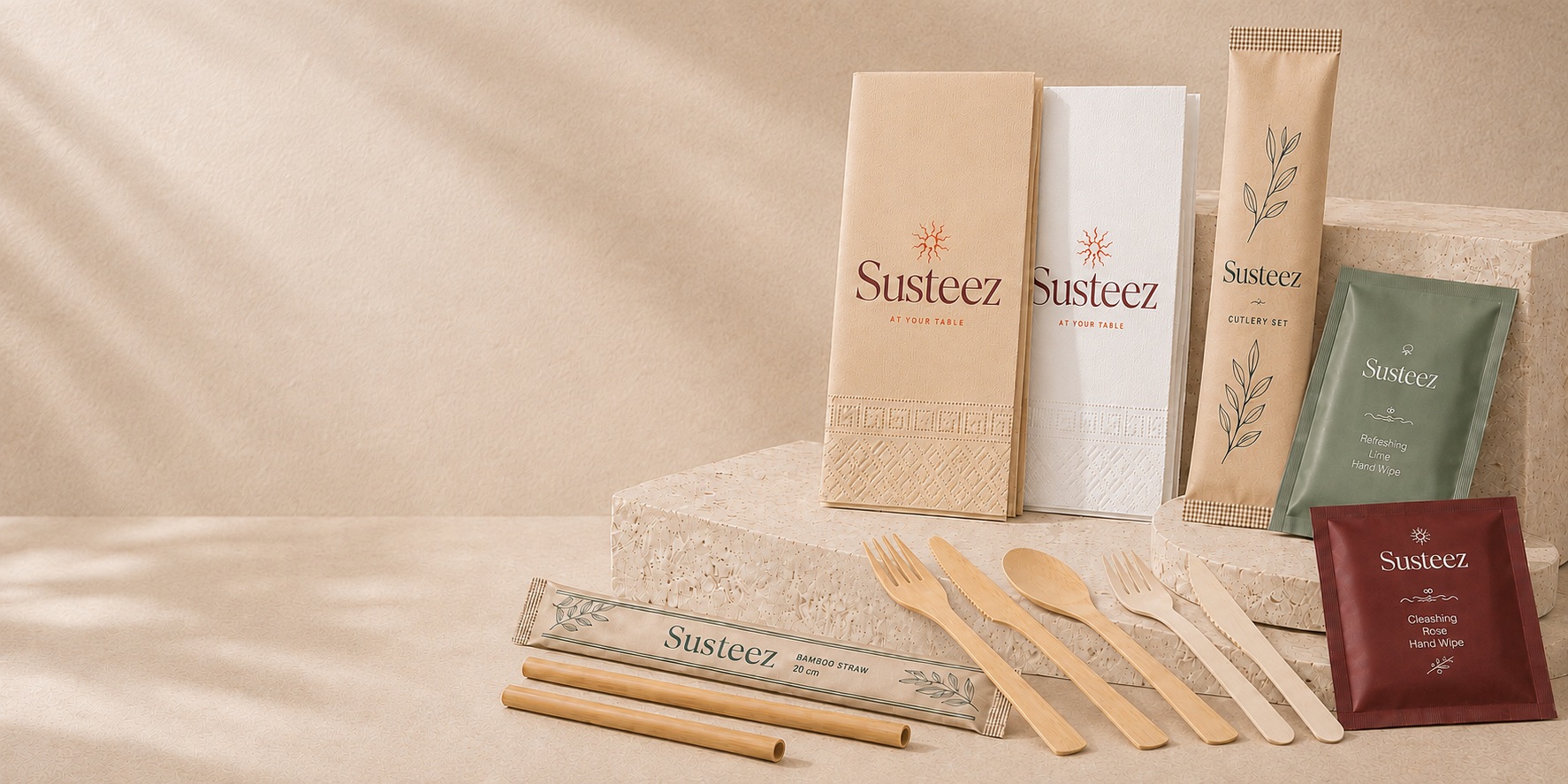
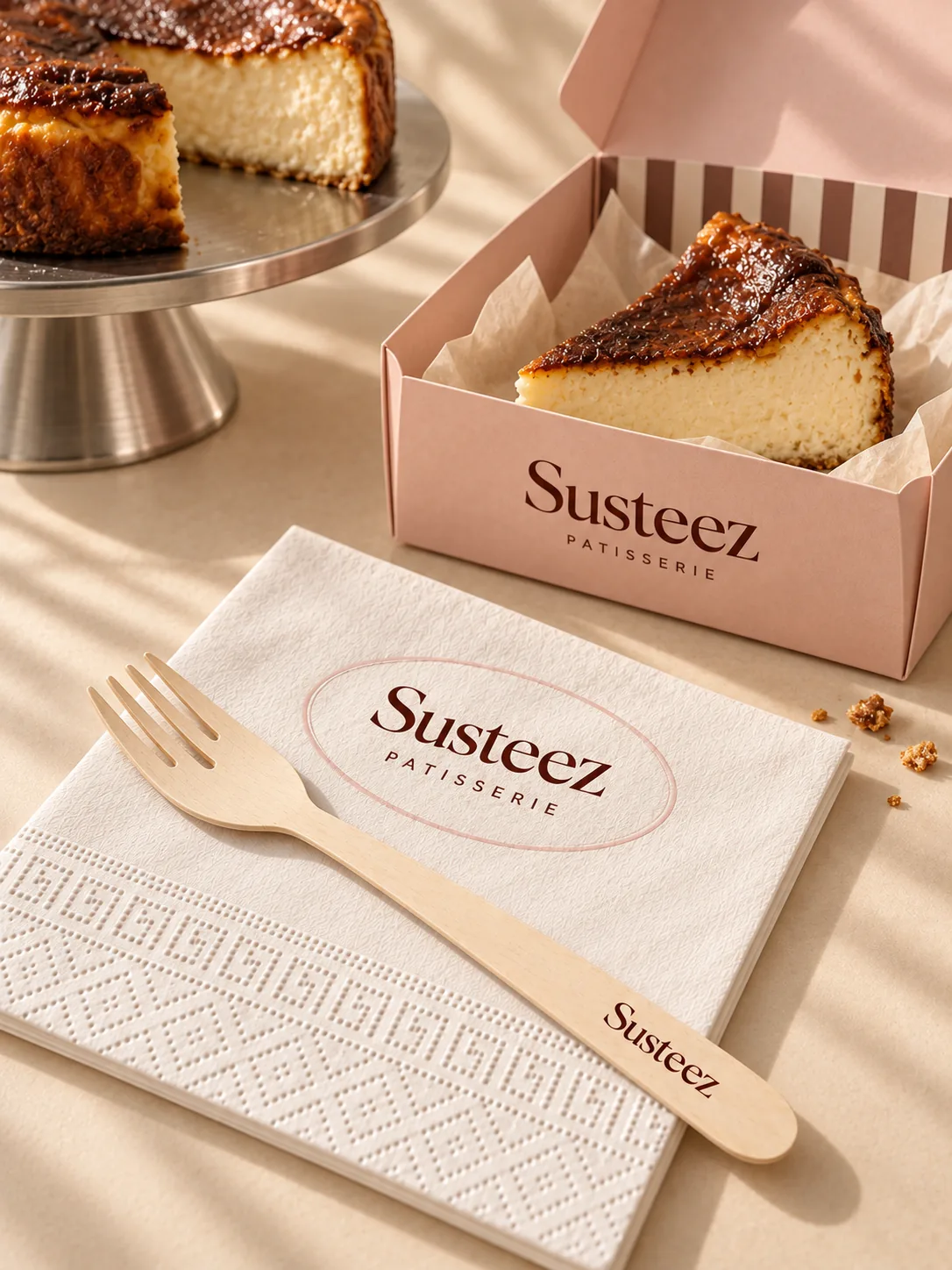
In a patisserie the problem single-use items run into is fat. Butter pastry carries into the napkin and the inside of the box, and the print sits on that same surface. The second decision is the strength of the fork: a dense slice bends the tines of a thin one. The print is seen inside the box, not on it.
Pastry is not eaten where it is bought
Most of a patisserie's sales leave in a box — to a home, an office, a birthday. The person who opens that box is often not the person who bought it. The fork and napkin that come out of it are that person's only contact with a shop they have never walked into.
Grease is a paper problem, not a wood problem
Butter pastry transfers to the napkin and the stain darkens the paper. Print can make that more visible: on a pale ground with a dark single colour, a grease mark reads as if it were part of the print. Embossing never has this problem because it carries texture, not colour. Where there is fat on the table, embossing is not only an aesthetic choice.
Fork strength is about thickness, not length
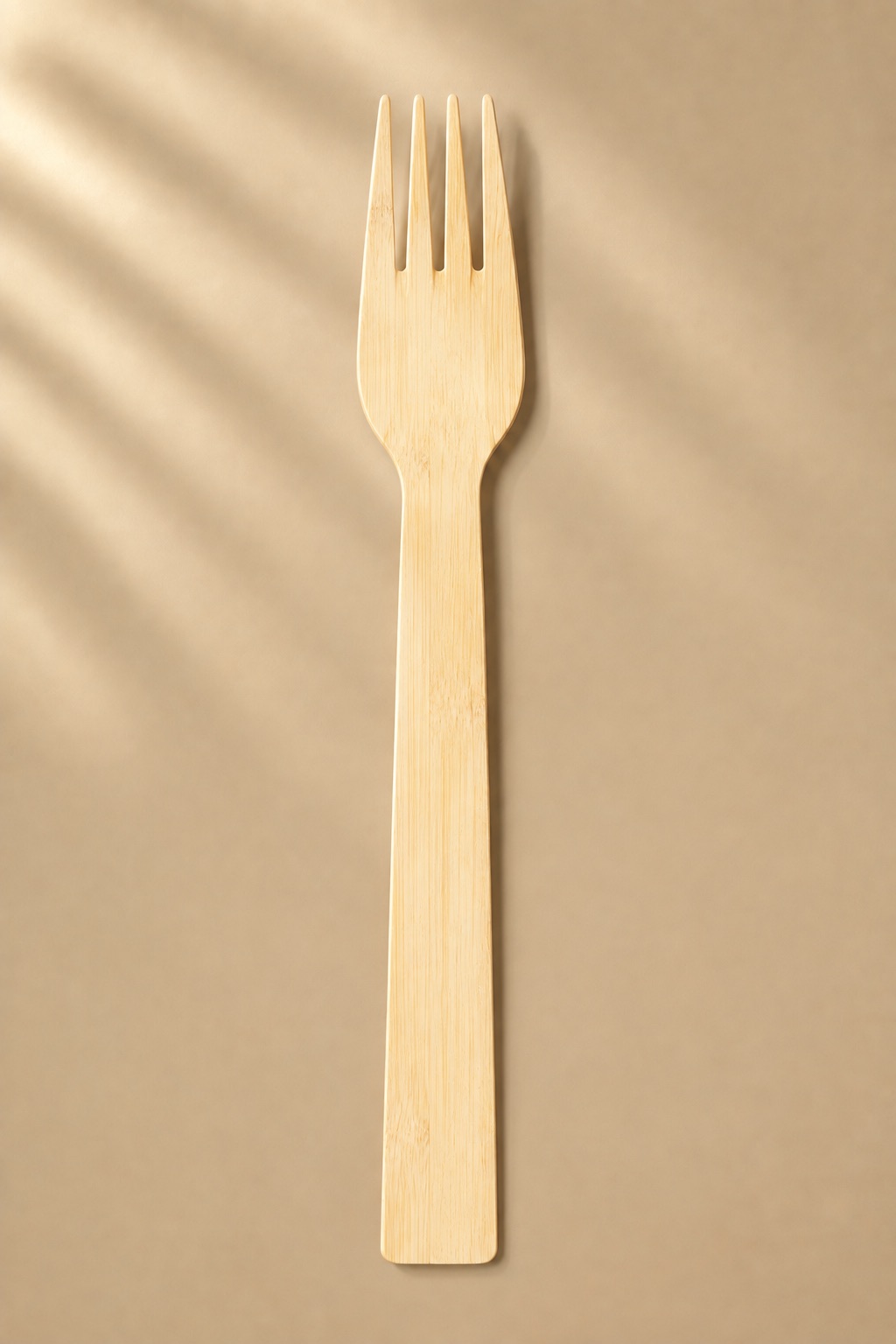
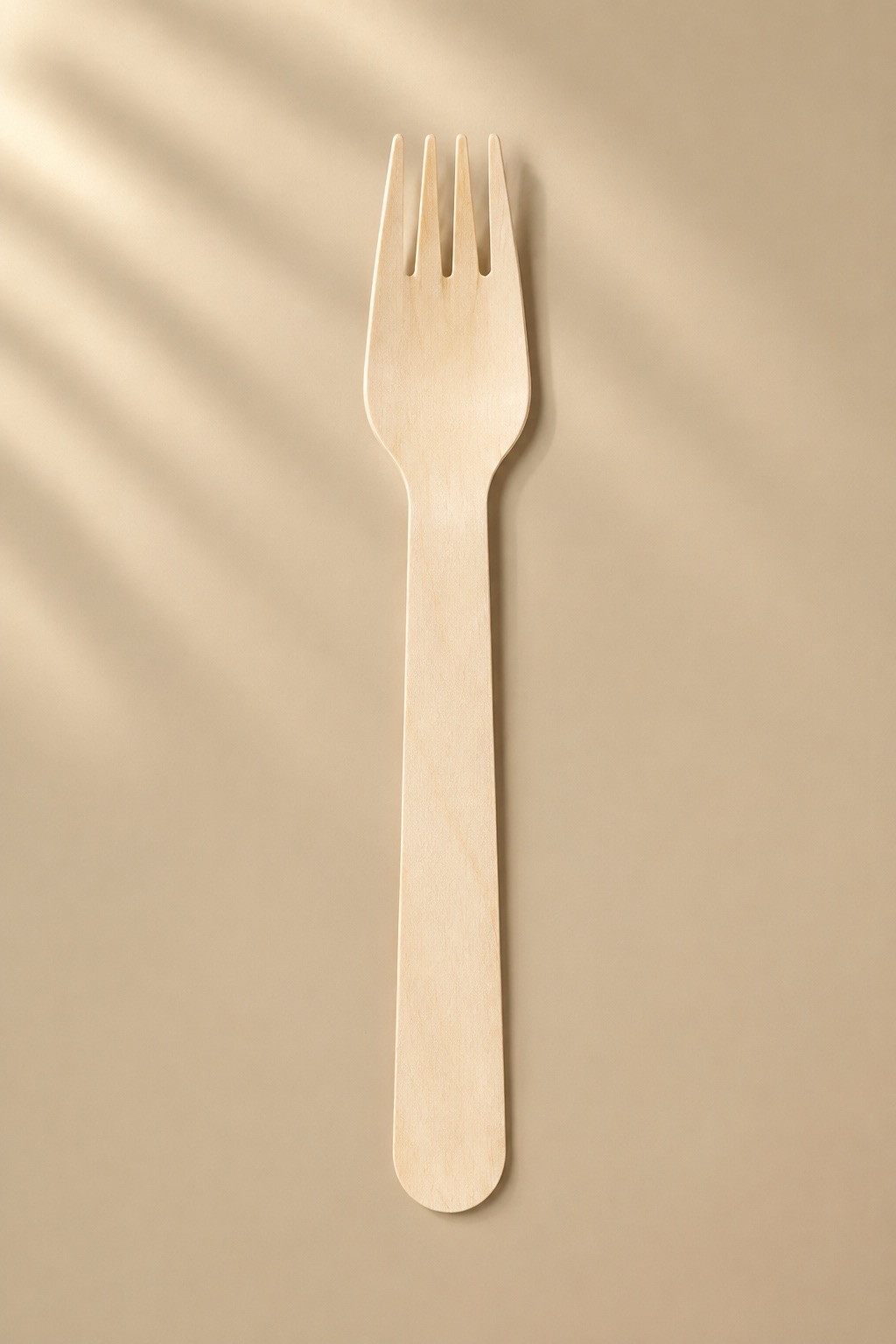
A dense cheesecake or a chilled tart does not cut like a mousse. The tines of a thin wooden fork bend in that slice. That is what the premium line is for: same length, thicker body. The print still stays on the handle and the bowl is left bare.
What you pick, and why
The plastic cutlery ban covers the cake fork too
The ban on single-use cutlery does not look at what the item is used for. France banned it on 1 January 2021 and being compostable buys no exemption there; Italy wrote its own exemption for certified compostable items, and the European Commission has challenged it. A cake fork sits inside that picture.
Colour answers to the box, not the display case
The case is full of colour, but the person opening the box never saw it. The print colour is therefore chosen against the packaging: one colour or embossing on blush, cream or kraft, so it reads calmly when the lid comes off.
Products
Start with whichever one you want to continue with.
Frequently asked
- Will a grease mark ruin the print on a napkin?
- The mark is not permanent, but on a pale ground with a dark single colour it can visually merge with the print. Embossing does not carry that risk.
- What is the difference between the premium and standard wooden fork?
- Same length, thicker body. In a dense slice the tines of the standard fork can bend.
- Do you print the box as well?
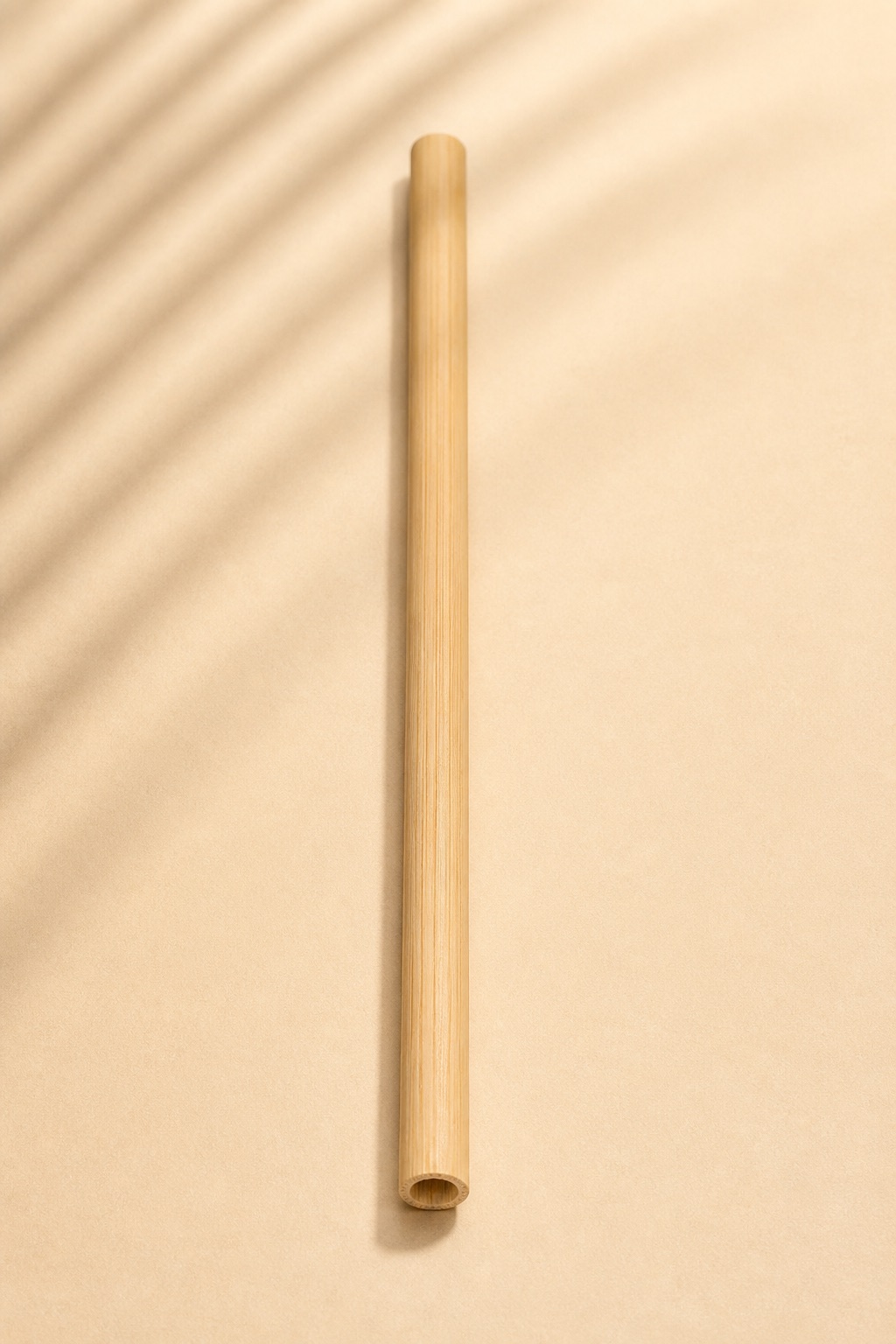
- Print goes on cutlery, napkins, wet wipes, straws and their kits. Boxes are not among the lines listed on the site; because the range is growing, the current scope is confirmed in writing at quotation.
Last updated: 2026-09-15