
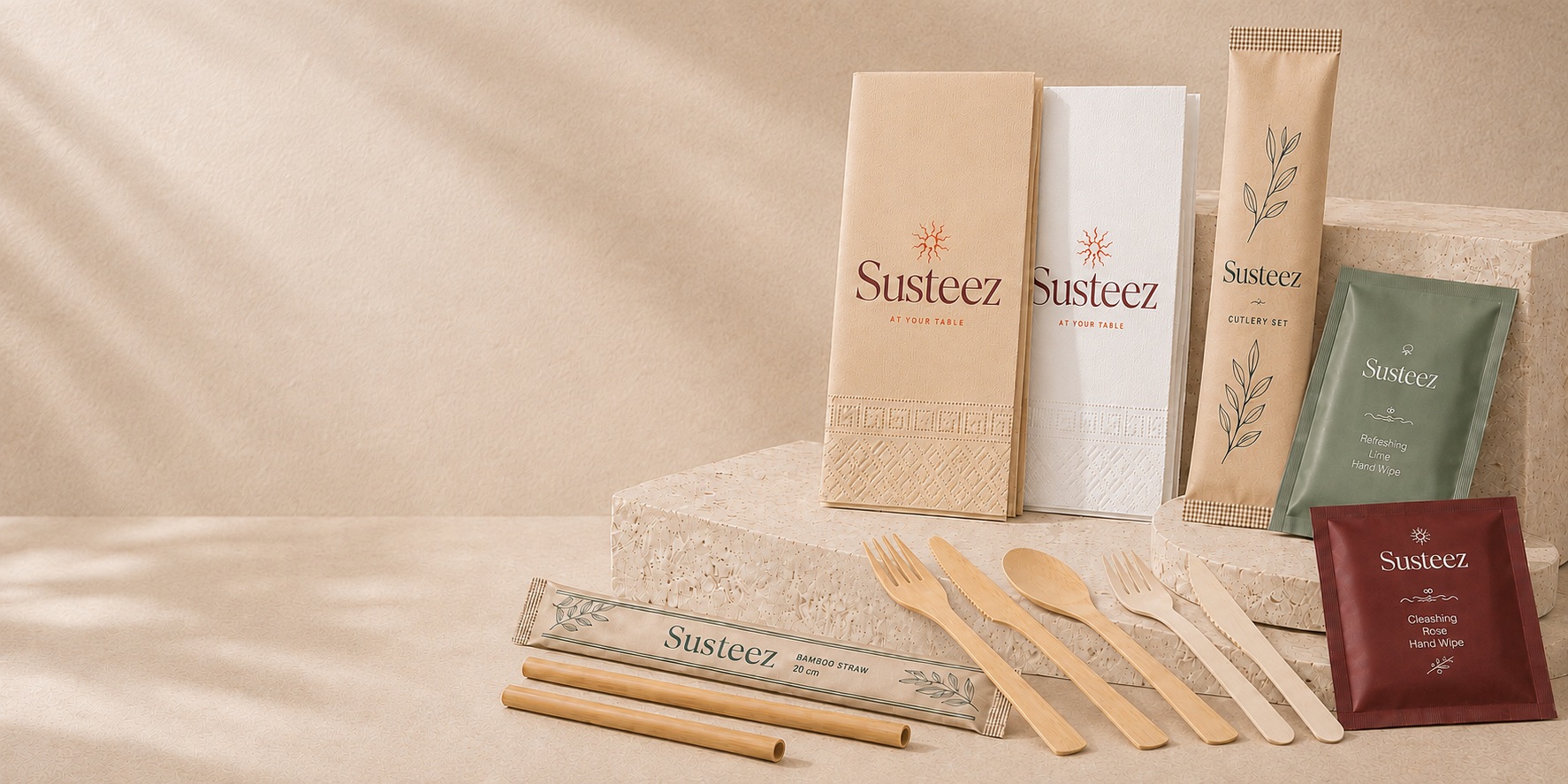
Bamboo straws or paper straws?
Paper straws are cheap and widespread, but they soften and fall apart in a drink, which is the single most common source of guest complaint. Bamboo costs more per unit, holds its form for the length of the drink, and takes print directly on the body. The decision is not about price but about whether the complaint is acceptable.
Side by side
The real problem with paper
It is not the material, it is time. Alongside an espresso finished in minutes, paper causes no trouble. In an iced coffee or a cocktail held for half an hour the edges soften and it leaves a taste. That is precisely where the complaints cluster.
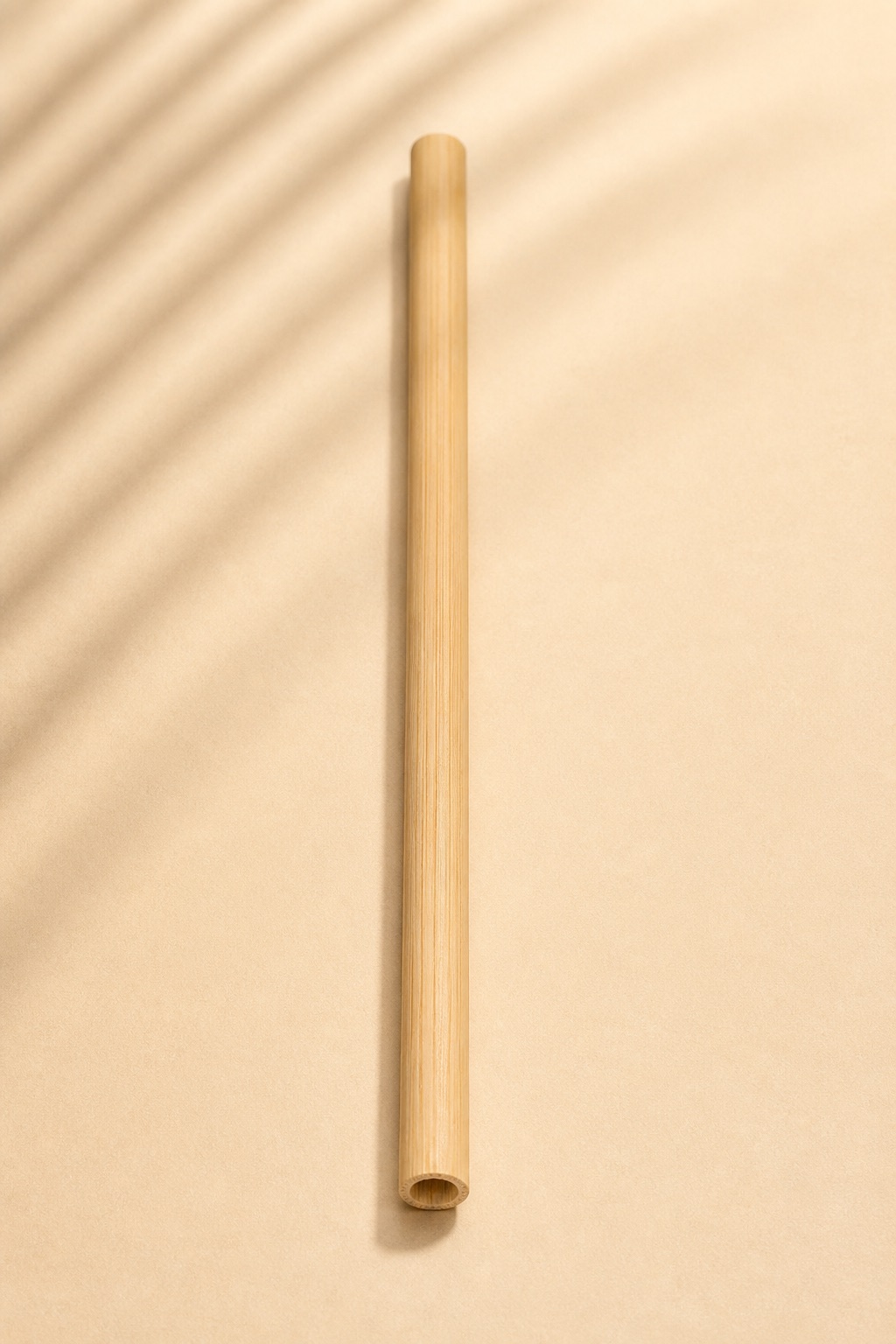
What bamboo adds
It keeps its rigidity and its body takes print. A logo sitting on the straw puts the brand in every photograph the glass appears in, which is the real reason beach clubs and cocktail bars specify bamboo.
What offsets the cost
Bamboo costs more per unit. What it replaces is not only the straw: the replacement requests and complaint handling that come with paper disappear too. Comparing unit price alone leaves that out of the calculation.
Who chooses which
Quick service and takeaway can work with paper. Seated service, beach clubs, cocktail bars and cafés that care about brand visibility move to bamboo. Length follows the glass: 15 cm for short glasses, 20 cm for tall and iced drinks.
Frequently asked
- Can bamboo straws be reused?
- They are produced as single use. The rigidity is there to survive one service; reuse is not advisable on hygiene grounds.
- Do bamboo straws affect taste?
- Processed bamboo stays neutral. The taste transfer seen with paper does not arise.
Last updated: 2026-09-13