
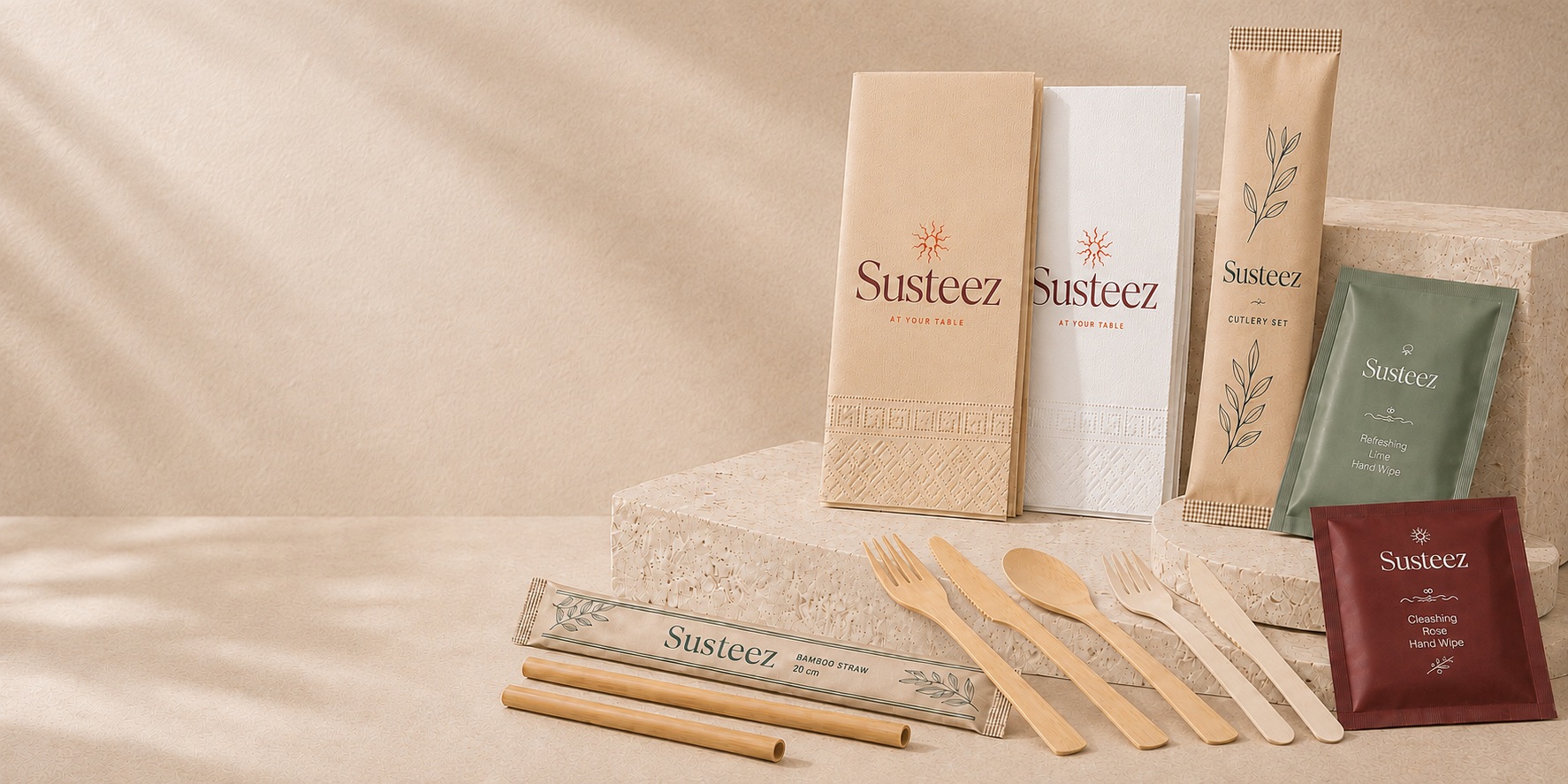
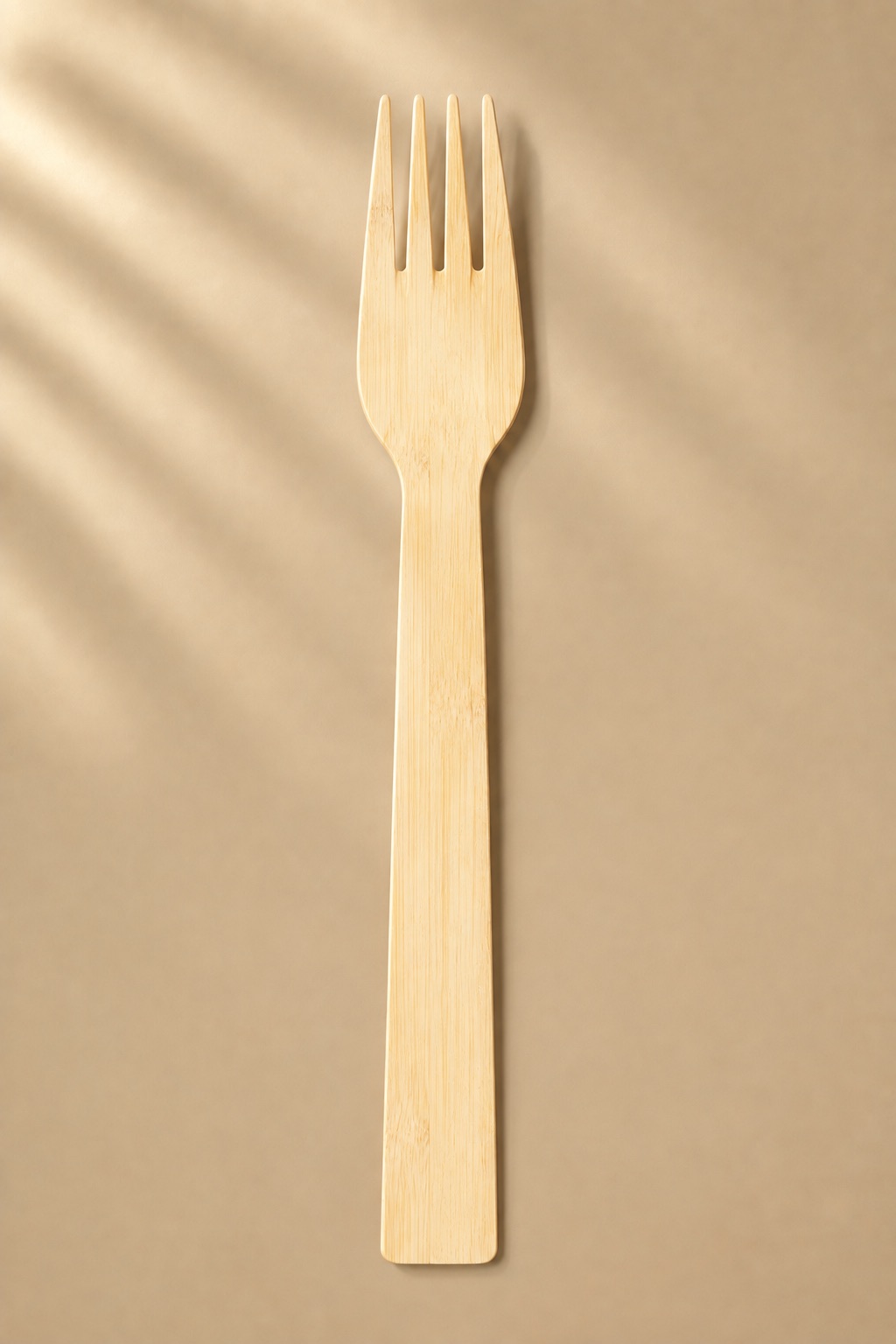
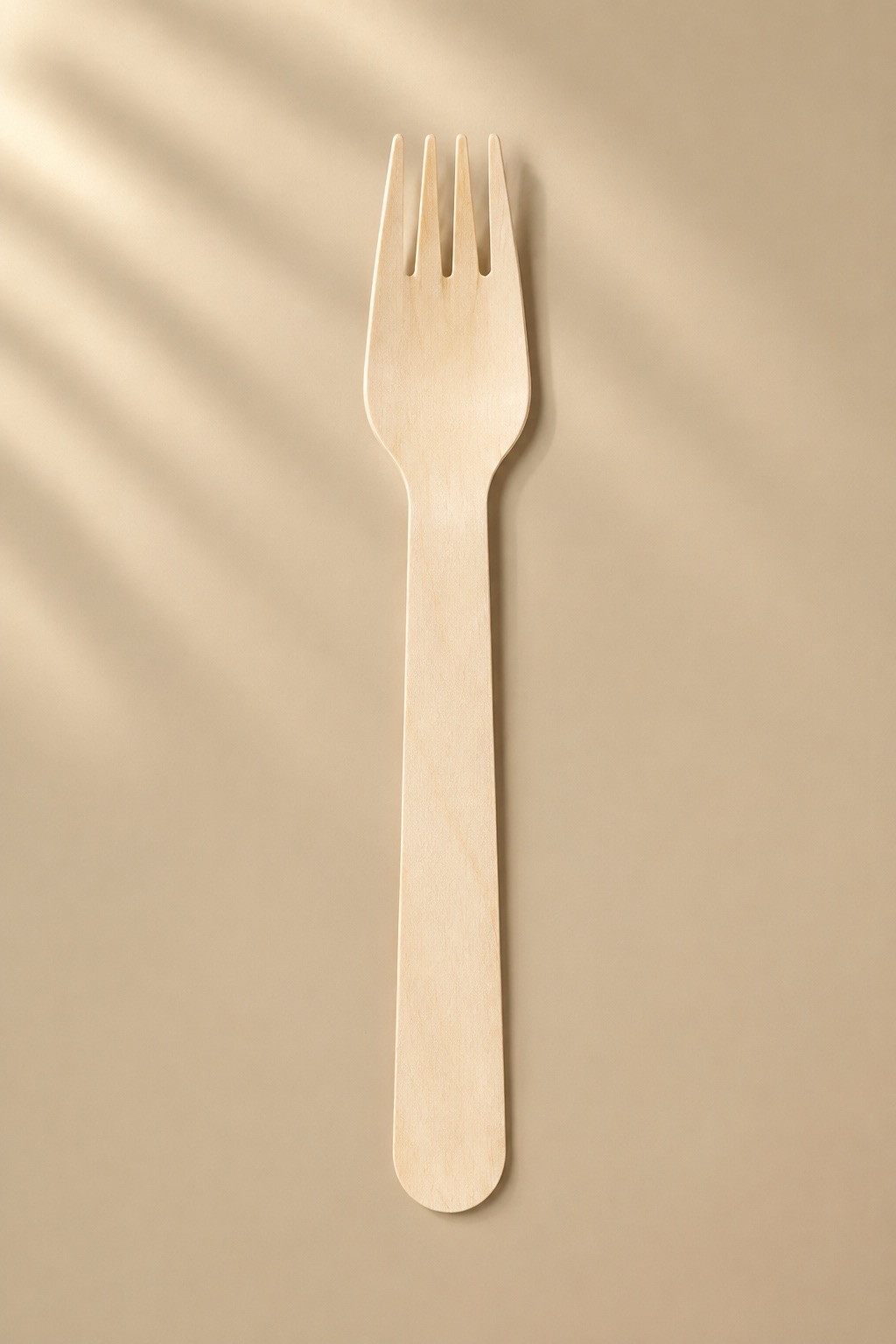
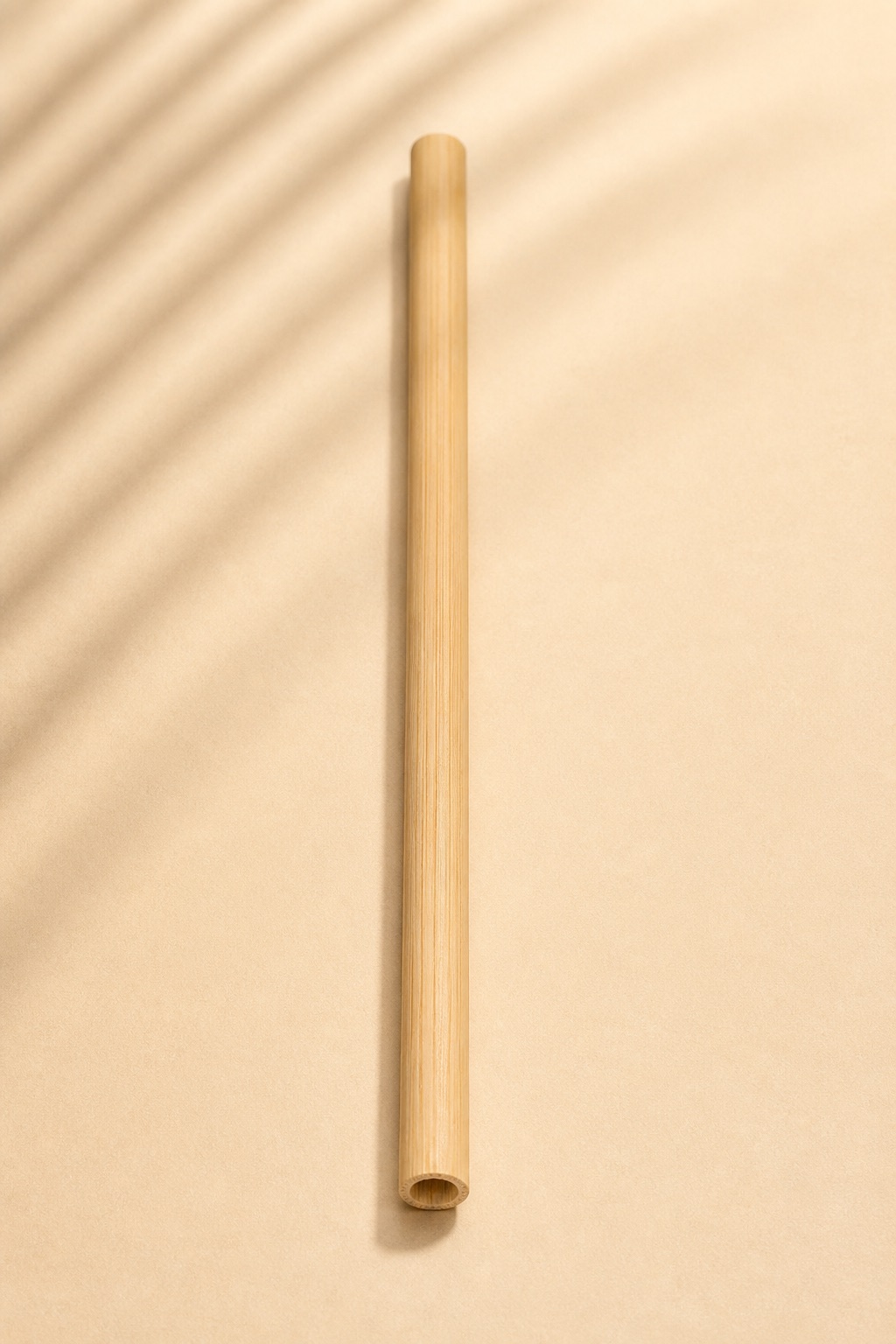
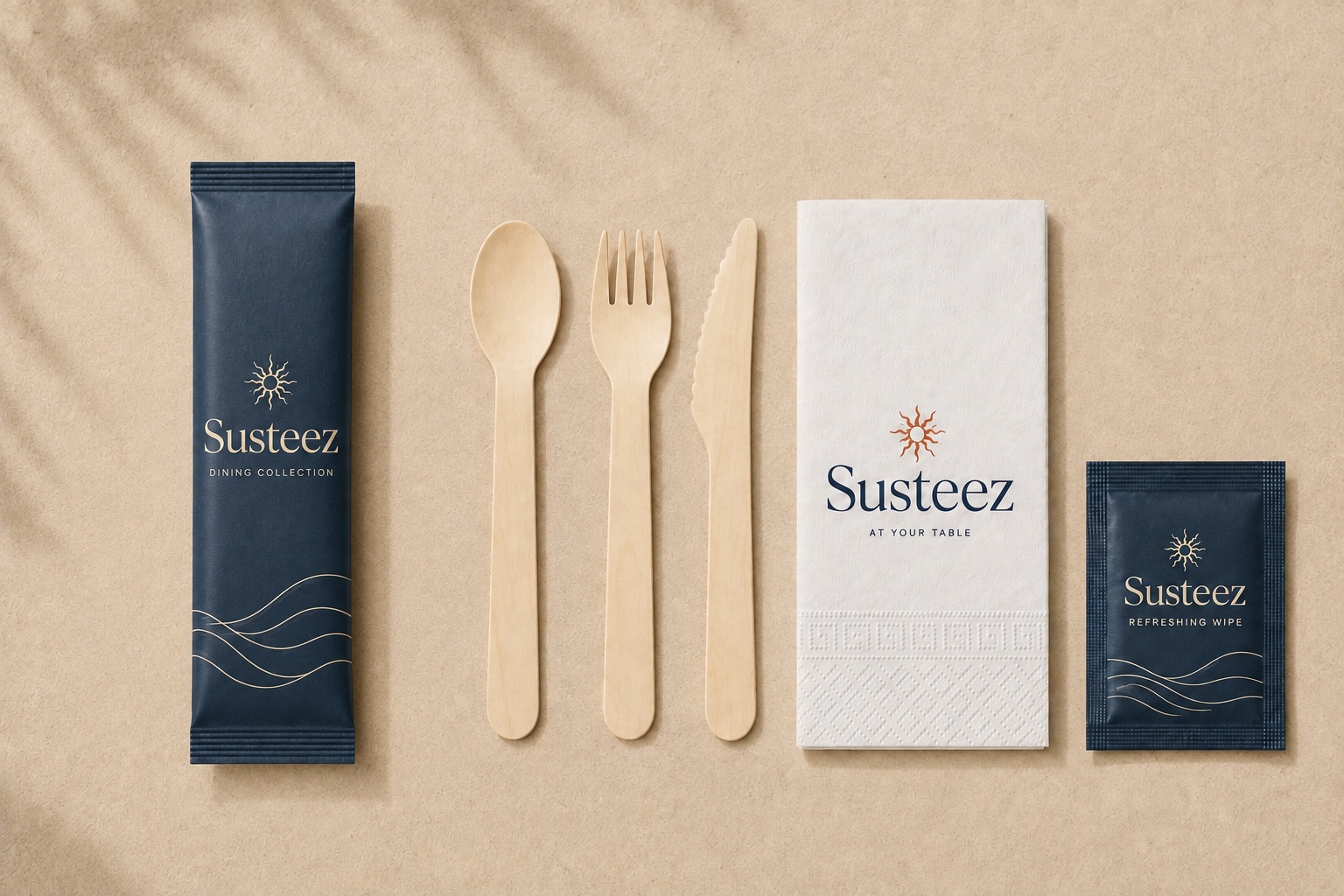
Wooden cutlery or PLA cutlery?
PLA is a plastic made from plant feedstock, and it looks like plastic; a guest reads it as plastic at a glance. Wood and bamboo settle that perception without explanation, break down in a home compost heap, and do not deform in hot food. PLA earns its place where transparency or a moulded shape is required.
Three dimensions of the comparison
Why perception carries so much weight
A business that switches to sustainable products wants the guest to notice. A wooden fork makes the point the moment it reaches the table; a PLA fork needs a line of explanation beside it. On a single-use item nobody reads the explanation.
Heat resistance is a practical difference
PLA can soften in hot food, and it shows most with soup and hot mains. Wood and bamboo do not have the problem; temperature does not change the shape of the item.
The regulatory side
The EU single-use plastics directive defines plastic by how the polymer behaves, not by its feedstock. PLA counts as plastic and falls inside the cutlery ban; wood and bamboo sit outside it.
When PLA is right
When transparency is needed, or when a shape exists that wood cannot produce — a deep spoon bowl or a clear lid. In those cases wood is not an alternative.
Frequently asked
- Does wooden cutlery break?
- Birch has ample strength for this use. With the right thickness and species it holds up in normal service.
- Is PLA cheaper?
- It varies by quantity and market. The decision is usually made on perception and regulation rather than price.
Last updated: 2026-09-13