
Napkin sizes: which one for which service
Napkin size follows the weight of the service: 25×25 for coffee and bar, 33×33 for everyday restaurant service, 38×40 for dinner and heavier meals. Size is not the whole decision — together with the fold it determines both how the napkin reads on the table and how visible the logo is.
Size and use
The fold is chosen with the size
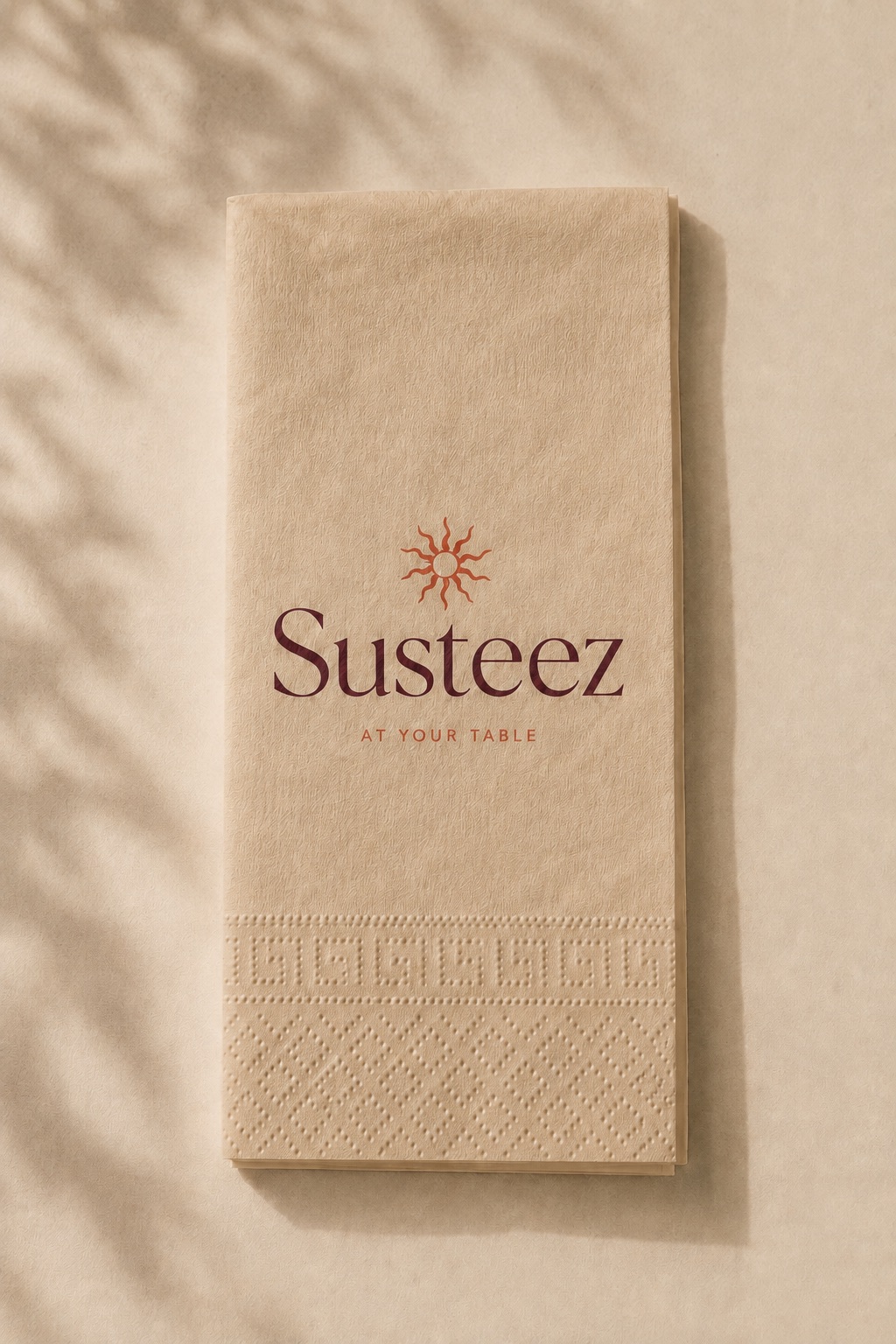
The same size reads completely differently depending on the fold. A quarter fold presents the widest face and shows a logo best; narrower folds are easier to carry but reduce the print area. The fold belongs in the size conversation.
Bigger is not automatically better
38×40 is right at dinner and excessive beside a coffee, where it raises cost for nothing. Size should follow the surface the guest actually needs — the surplus goes to the bin and to the invoice.
The area the logo will occupy
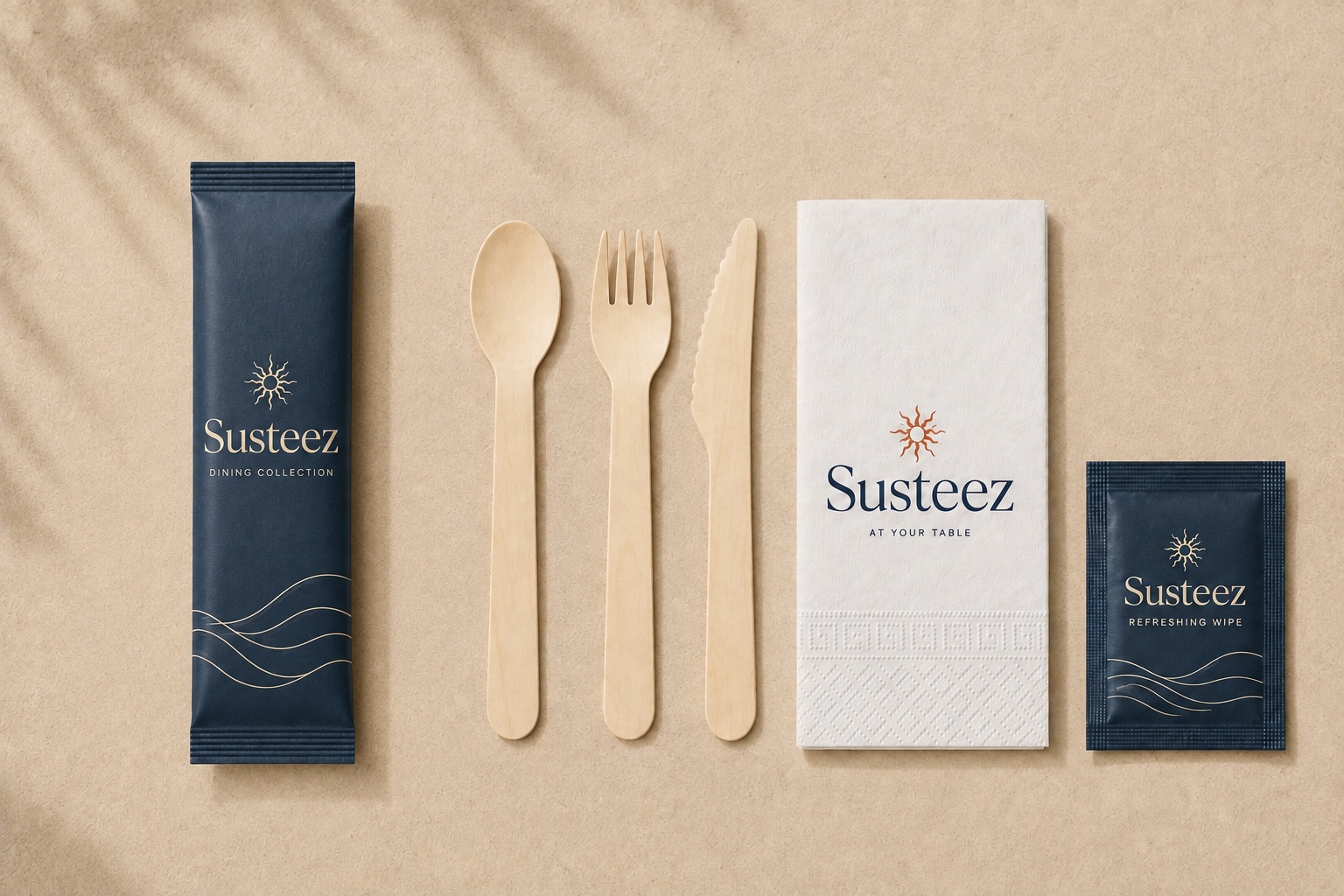
Print sits on the face that remains outward when folded. The visible area is therefore not the open size but one face of the folded size, and the design has to be built to that face.
Annual consumption does not fall
A larger napkin does not mean fewer napkins; the guest still takes one. As size grows, unit cost and shipped volume both rise while quantity stays flat.
Frequently asked
- Which size sells most?
- 33×33 is the standard of everyday restaurant service and the most widely used.
- Does the die-line change with size?
- Yes. Each size has its own open dimension and fold positions, so the template follows the size.
Last updated: 2026-09-13