
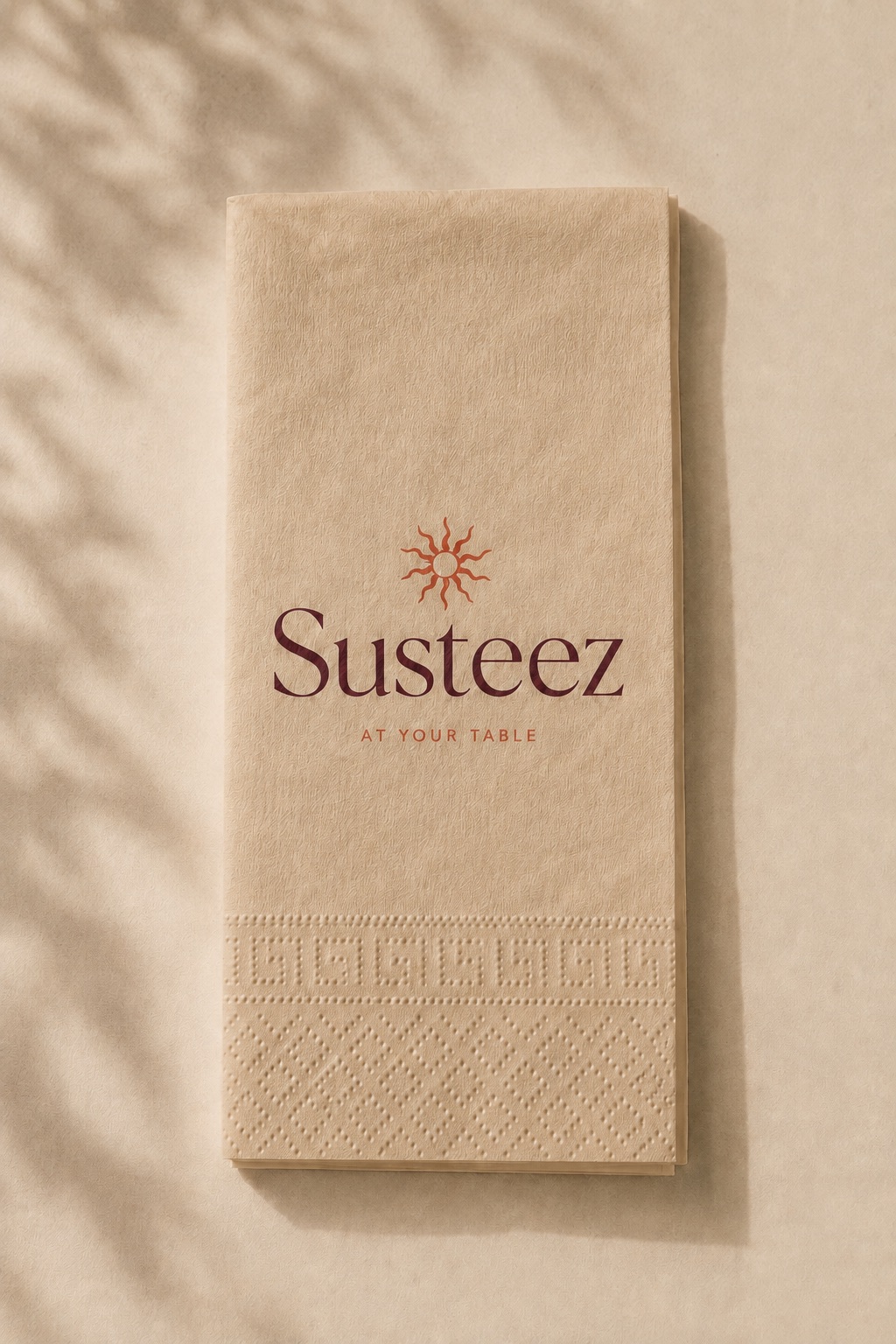
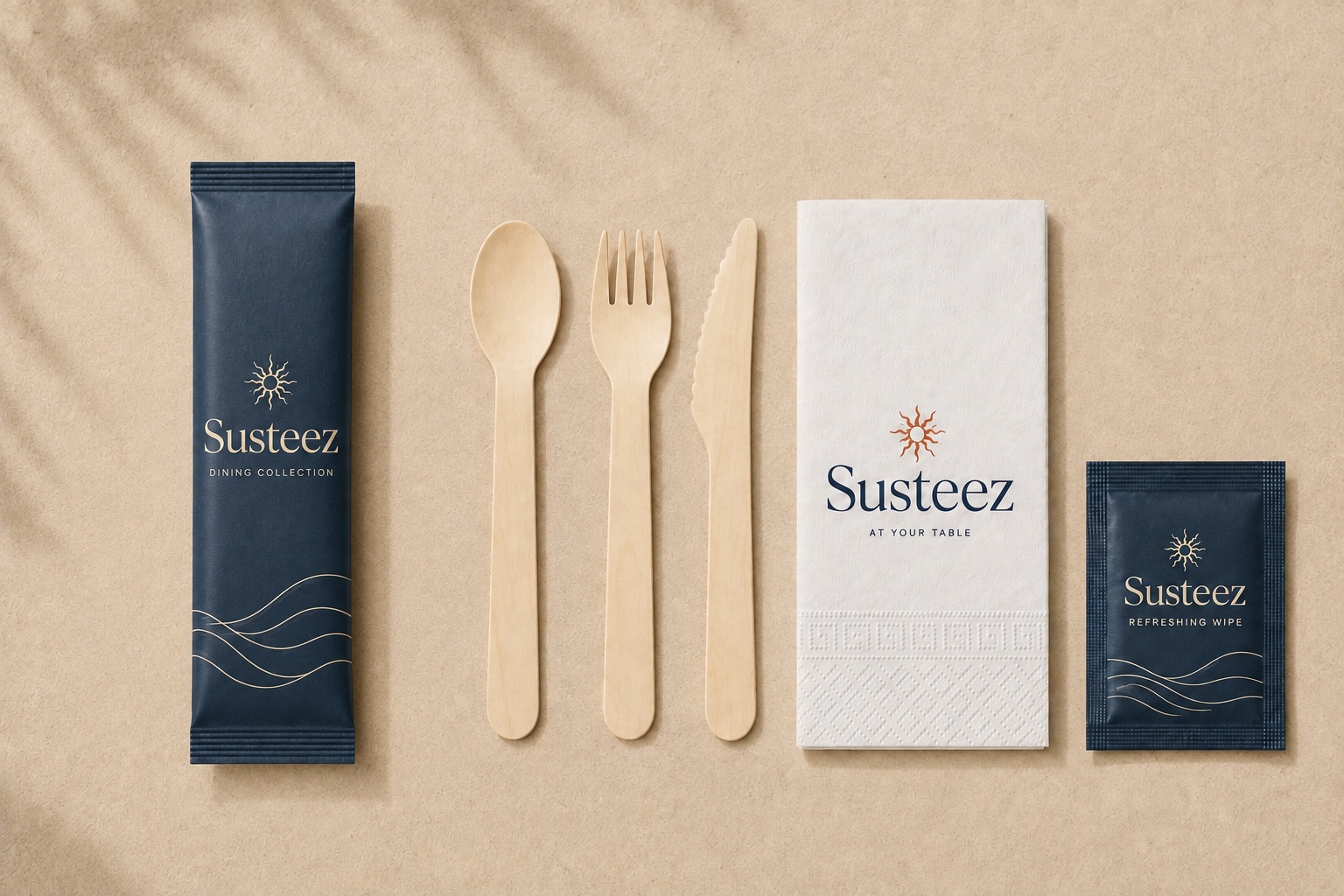
Two-ply or three-ply napkins?
Ply is how many paper layers the napkin has; gsm is the weight of each layer. They are chosen independently: a two-ply napkin can feel thin at low gsm and substantial at high gsm. Absorbency and hand feel come mostly from ply, print sharpness mostly from gsm.
Two variables, four outcomes
What ply changes
More layers make the napkin loftier, fuller in the hand and more absorbent. It also reads as a more definite object on the table, which is largely why fine dining specifies three-ply.
What gsm does instead
Weight governs print sharpness and the strength of the sheet itself. On lighter stock ink spreads further and fine detail disappears. Brands whose logo contains thin strokes should not reduce gsm.
Choosing by service
Alongside coffee, two-ply is more than enough — the napkin is in use briefly. With oily mains, seafood and steak, three-ply shows its difference. Cocktail and bar service usually pairs two-ply with a smaller size.
How cost moves
Ply raises paper consumption directly, so it is the single biggest lever on cost. Where budget is tight, dropping ply saves more visibly than dropping gsm — and it is also the change guests feel most.
Frequently asked
- Is single-ply available?
- Yes, and it is the most economical option. It suits quick service and dispensers, where print quality and hand feel expectations are lower.
- Does ply affect compostability?
- No. What matters is the paper itself and any coating, not the number of layers.
Last updated: 2026-09-13