

What sets the price of printed napkins
The unit price of a printed napkin comes from five variables: paper type, gsm, ply, number of print colours and order quantity. Four are the buyer's decision. Quantity has the largest single effect, because it determines how many units the fixed setup cost is divided across.
The five variables
Why quantity dominates
Plate making and press setup are fixed costs. Divided across three thousand units they form a substantial share of unit price; across fifty thousand they nearly vanish. Price breaks exist because of this arithmetic, not as a discount.
Why kraft costs less
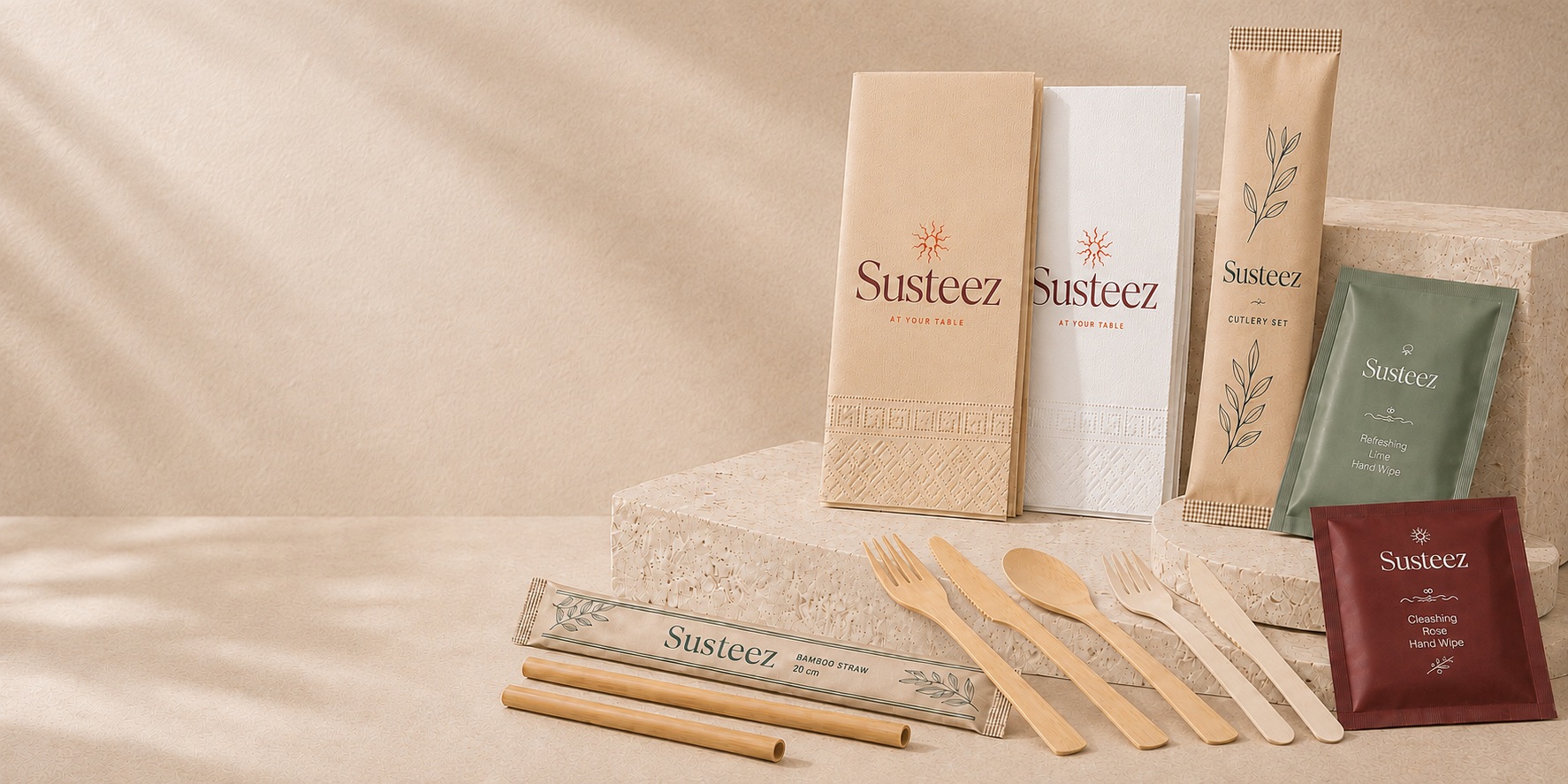
White paper goes through bleaching and kraft does not, so kraft is both cheaper and more natural in appearance. In return, light colours print weakly on it — the saving arrives together with a design constraint.
The right order in which to cut cost
- Reduce to a single colour — the saving that disturbs appearance least
- Move up one quantity break, if there is somewhere to store it
- Switch to kraft, if the design allows
- Reduce ply — the largest saving, and the most noticeable change
Why a quote discusses structure rather than a number
Every combination of these five produces a different price. Publishing a single list price would mean publishing the wrong number most of the time, which is why napkins are sold by quotation built on the configuration.
Frequently asked
- Why do two quotes at the same quantity differ?
- If gsm, ply or paper type differ, the product differs. Equalise those three before comparing.
- Are samples charged?
- The samples themselves are free; shipping is on the receiver, or on the receiver's own carrier account.
Last updated: 2026-09-13